
Vulnerabilities
Session Fixation Myths: What Developers Actually Need to Know
Session fixation attacks bypass login screens by forcing a user to adopt an attacker-controlled identifier, rendering simple cookie expiration strategies ineffective.
Session fixation attacks bypass login screens by forcing a user to adopt an attacker-controlled identifier, rendering simple cookie expiration strategies ineffective.
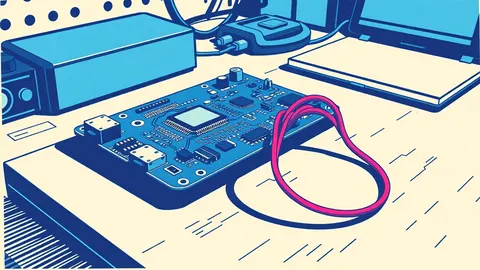
Firmware flaws persist because update mechanisms are often manual, air-gapped assumptions are frequently broken, and code complexity hides critical execution paths.

Session theft often bypasses password checks, leaving only behavioral anomalies and impossible geographic jumps as visible evidence in server logs.

Malicious code intercepts transaction details at the browser level before they reach the payment processor, bypassing standard network encryption.

You must respond to data access requests within a strict window, but you can lawfully deny them if the request is manifestly unfounded or excessive in scope.

Switching to memory-safe code eliminates buffer overflows but introduces new risks in logic errors and complex dependency management that require different testing strategies.

Small teams are targeted not for their data volume but for their access credentials, which serve as keys to larger corporate networks.

Modern endpoint protection relies on behavioral analysis rather than signature matching, requiring a distinct configuration and testing approach compared to legacy security tools.

Botnets are no longer just blunt instruments for spam; they are precision tools for credential stuffing and financial fraud that bypass basic rate limits.

Most teams collect logs but never define the signal, creating a high-fidelity record of activity that no one reads until an incident occurs.

Deleting files leaves magnetic or electrical traces that standard recovery tools can reconstruct, making physical destruction or cryptographic erasure the only reliable end state.

Incorrect rate limiting often fails because it measures traffic by the wrong identifier, allowing attackers to bypass controls using distributed sources or rotating headers.

Audit logs fail not because the cloud provider lacks features, but because the storage destination inherits the same excessive permissions as the rest of the infrastructure.

Tabletop exercises expose the gap between documented procedures and actual human behavior, revealing where your incident response plan fails before a real breach occurs.

Fake antivirus software often operates inside legitimate system processes, making standard removal tools ineffective without behavioral analysis.

Most database breaches occur not because hackers break encryption, but because administrators leave default access rules open to the public internet.

File integrity monitoring reveals when a system file changes, exposing attacks that hide inside legitimate software updates or configuration tweaks.

Most continuity plans fail because they optimize for uptime rather than data integrity, leaving organizations unable to revert to a known good state after corruption.

Your smart home devices often transmit unencrypted sensor data to third-party servers, creating a persistent record of your daily habits that persists long after you leave the house.

Open redirects hide in legitimate-looking URLs, allowing attackers to bypass security checks and craft convincing phishing links that steal credentials.

Network segmentation isolates workloads by controlling packet flow at the hypervisor level, creating boundaries that prevent lateral movement even when perimeter defenses fail.

Hybrid environments fail when security policies treat public and private infrastructure as separate entities rather than a single attack surface.

End-to-end encryption protects data in transit but leaves metadata exposed, meaning your communication patterns remain visible even when content is hidden.

Parental controls and age gates rarely stop data collection; the infrastructure tracks minors regardless of stated consent or visible settings.