
Privacy & Policy
Private file sharing services for small teams with zero budget
Small businesses leak sensitive data not through sophisticated hacking, but through overly permissive cloud sharing links that never expire.
The DataSafe Times Knowledge Desk is the part of the DataSafe Times newsroom that covers reference guides that explain the ideas behind the headlines. It is a newsroom desk, not a single person. Sections: Guides. Guides are drafted with AI assistance, carry no invented statistics and are reviewed when the facts change. It has published 125 articles so far. See the editorial policy or report an error.
Small businesses leak sensitive data not through sophisticated hacking, but through overly permissive cloud sharing links that never expire.

Location tracking relies less on satellite constellations and more on ambient network identifiers harvested by background applications.

Client-side encryption ensures your cloud provider cannot read your files, but it strips away server-side search and collaboration features.

Workplace monitoring systems track your digital activity through tools that function much like an open-plan office built inside your computer.

Web browsers treat cookies as blind identity tokens, meaning a site cannot verify who holds them once an attacker copies the string.

Most systems assume blocking a script stops state persistence, ignoring alternate fingerprinting vectors entirely.

Anti-facial-recognition garments disrupt automated identification by feeding machine learning models fabricated geometry rather than hiding your face.

Geotags embedded in social media posts expose company infrastructure far more than street addresses do.

Public conversational records index automatically when applications generate predictable Uniform Resource Locators for exported sessions.

Memory corruption often manifests as silent data degradation or intermittent crashes rather than immediate system failures, requiring deep state analysis for detection.

Atomic operations and file locking are insufficient defenses against time-of-check to time-of-use bugs in modern multi-threaded environments.

A vulnerability can have a critical severity score but remain unexploitable in production due to environmental constraints or defensive coding patterns.

Type confusion occurs when software misinterprets data structure, allowing attackers to execute arbitrary code by tricking the program into treating one data type as another.

Remediation SLAs fail when engineering velocity conflicts with security urgency, creating a hidden backlog of unpatched systems that never reach production.

Template injection leaves distinct syntax artifacts in application logs that differ significantly from standard SQL or path traversal attempts, allowing for precise detection.

Logging flaws often expose secrets because developers treat logs as passive outputs rather than active code paths with security consequences.

Default-deny file policies stop unauthorized access before application logic runs, reducing the attack surface more effectively than runtime checks alone.
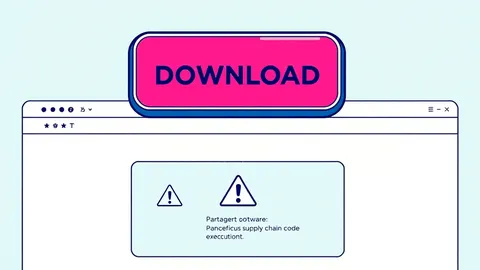
Package name squatting and sudden version resets often indicate compromised supply chains before static analysis tools detect the actual malicious code payload.

Input validation fails when logic depends on it; output encoding stops the majority of attacks with minimal development overhead and zero runtime cost.

Silent gaps in cloud logging allow attackers to operate undetected because security tools only analyze the events they actually receive from the platform.

Most insider data theft succeeds because standard network perimeter defenses ignore the internal user who already possesses valid authentication credentials and authorized access.

Credential exposure persists because static hashes are insufficient, requiring continuous monitoring and automated rotation to mitigate long-term access risks.
Immutable infrastructure eliminates configuration drift by replacing servers instead of modifying them, forcing a complete rebuild for every change.

Your cloud attack surface expands beyond servers to include misconfigured storage buckets, stale API keys, and identity missteps that automated tools often miss.